

See the plan before treatment
Understand What Your Scan Adds to Implant Planning
Dental implant planning starts with understanding your anatomy and the teeth you need to replace. At Rudnick Dentistry in Palm Beach Gardens, CBCT imaging and digital planning help Dr. Andrew Rudnick evaluate an implant site and discuss the proposed treatment. This page focuses on imaging and guided planning.
3D CT Scans and Guided Dental Implant Planning
A successful plan considers both the replacement teeth and the bone that will support them. At Rudnick Dentistry, 3D imaging and digital planning help Dr. Rudnick evaluate your anatomy and explain the proposed approach before implant treatment.
What a CBCT scan helps us see
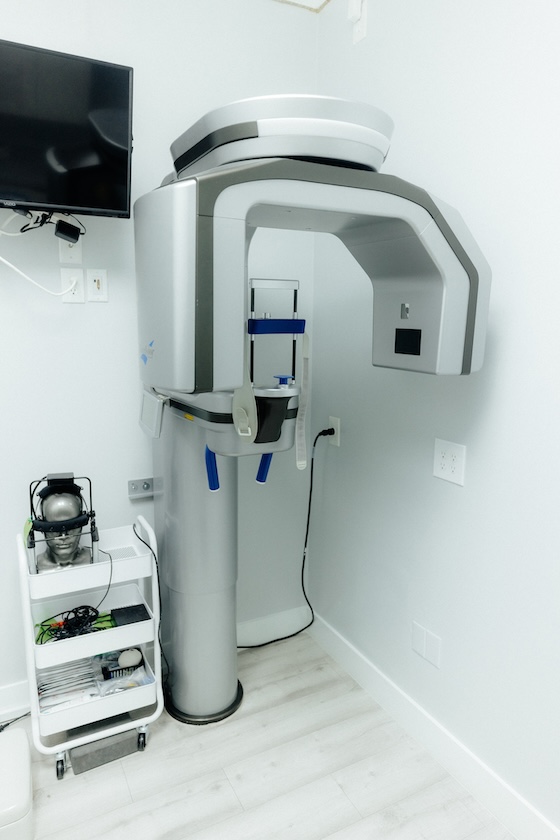
Cone beam computed tomography, or CBCT, produces a three dimensional view of your teeth and jaws. When this imaging is appropriate, it helps us assess bone height and width and the location of nearby nerves, sinuses, and tooth roots. Those details are considered alongside your examination, medical history, and the design of your replacement teeth.
What happens during the scan?
You stay still while the scanner moves around your head. The scan is noninvasive. Our team explains how to position yourself and what to remove before imaging. Bring recent dental images or let us know where they were taken so we can review what is already available.
How guided implant planning works
Digital records help plan the position and angle of an implant in relation to the intended crown, bridge, or full arch restoration. In suitable cases, a custom surgical guide helps transfer that plan to implant placement. The approach is selected for your anatomy and treatment needs.
What this means for your care
Your records help us discuss whether implants are appropriate, where they may be positioned, and whether bone treatment or another approach needs consideration. They also help coordinate the surgical and restorative stages. Technology supports the clinical decisions that shape your plan.
Understand the Limits of Implant Planning
Imaging and guides support treatment planning, but they do not eliminate surgical risks or guarantee a particular result. Your examination, medical history, and individual anatomy remain essential to the treatment decision.
Questions Worth Asking Before a Dental CT Scan

What question will this scan answer?
A scan is most useful when it addresses a specific planning question. Ask how the three dimensional information will affect the proposed implant location, the restoration, or a decision about additional treatment. The image is one part of the assessment, alongside your examination and health history.
Can my previous images be used?
Tell the team where and when earlier images were taken. A recent scan may provide useful information, although its quality and the area it covers must be suitable for the current question. Reviewing available records helps the team decide whether more imaging is needed.
What will I learn from the results?
Ask Dr. Rudnick to show you the area being considered and explain the findings in plain language. Your visit should connect the scan to a treatment decision: whether to proceed, consider another approach, or obtain more information. A picture of the bone alone does not determine the finished smile.
Meet patients who have shared their experiences with our practice. Choose a video to hear their story.
Chai’s Story
Watch patient video
John’s Story
Watch patient video
Jennifer’s Story
Watch patient video
Julia’s Story
Watch patient video
Liza’s Story
Watch patient video
Francis’s Story
Watch patient video
Chevy’s Story
Watch patient videoIndividual experiences and treatments vary. Select a video to watch it here.
Google Reviews From Our Patients
Reviews reflect individual experiences with the practice.
Discuss Your Implant Imaging Needs
Bring recent scans or the contact information for the office that took them. We can review the available records and explain what further information is needed for your implant plan.

